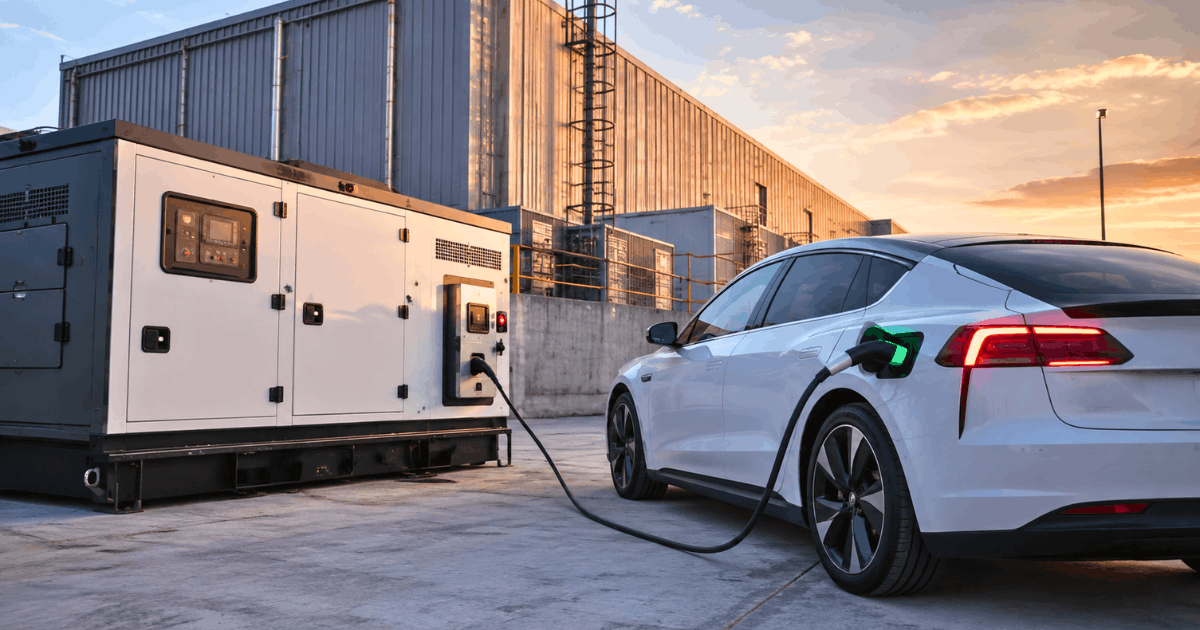
Yes, a diesel generator can charge an electric car, provided the generator produces suitable electrical power for the EV charging equipment and the installation meets the vehicle manufacturer’s and electrical safety requirements.
In simple terms, the diesel generator does not directly charge the EV battery. Instead, it generates electricity, which is supplied to the EV charger, and the charger then provides the appropriate electrical power to the vehicle’s battery.
This can be useful during a power outage, at remote locations, construction sites, events, workshops, or places where a grid connection is temporarily unavailable.
However, there is an important difference between technically possible and practical or economical. A diesel generator may be capable of charging an EV, but using a generator that is too small, unstable, poorly grounded, or unsuitable for sensitive electronic equipment can cause charging problems and potentially damage equipment.
How Does Diesel Generator Charging an Electric Car Work?
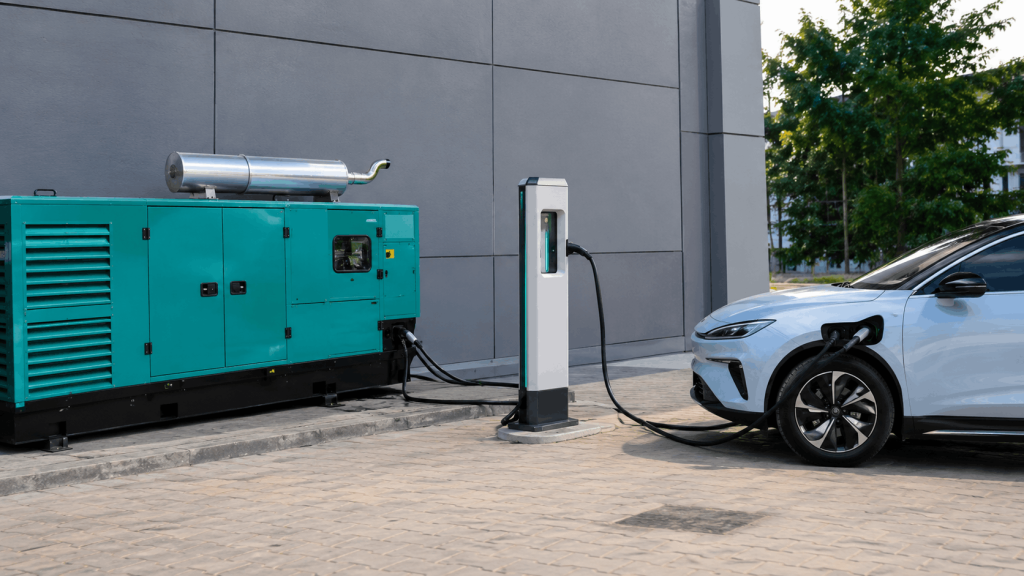
The basic process is straightforward:
Diesel fuel → Diesel engine → Alternator → AC electricity → EV charger → Electric car battery
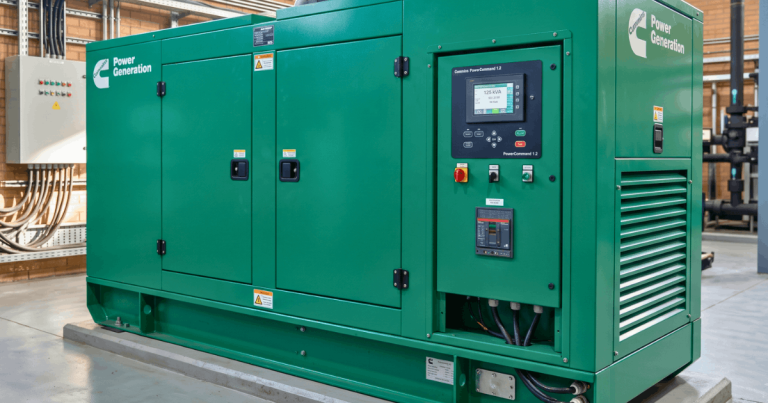
A diesel generator uses a diesel engine to rotate an alternator. The alternator produces electrical power, normally as AC power.
The EV charging equipment receives this electricity and manages the charging process. In AC charging, the vehicle’s onboard charger converts the incoming AC electricity into DC electricity suitable for the high-voltage battery.
Therefore, the generator is essentially acting as an independent electricity source for the EV charger.
The generator itself does not normally connect directly to the vehicle’s battery.
What Size Diesel Generator Is Needed to Charge an Electric Car?
Generator size is one of the most important considerations.
EV chargers can require considerably more power than ordinary household appliances. A portable or small diesel generator may be able to run a low-power EV charging setup, while a higher-power AC charger may require a substantially larger generator.
For example, a charging load of approximately:
- 3.3 kW requires at least a suitable generator with sufficient continuous capacity.
- 7.2 kW requires considerably more generator capacity.
- 11 kW requires a generator capable of handling that continuous load comfortably.
- 22 kW requires a much larger three-phase electrical supply and appropriate charging equipment.
These figures describe the approximate charging power, not the recommended generator rating.
A generator should not normally be selected simply by matching its nameplate rating to the EV charger’s maximum kW. The generator also needs sufficient reserve capacity for starting loads, voltage stability, other connected loads, ambient conditions and continuous operation.
A qualified electrician or generator professional should determine the appropriate generator rating for the actual installation.
Can You Charge an Electric Car With a Generator?
Yes, you can charge an electric car with a generator, but the generator must provide electricity that is compatible with the EV charging equipment.
Important factors include:
- Generator continuous power rating
- Output voltage
- Frequency
- Single-phase or three-phase output
- Voltage regulation
- Frequency stability
- Power quality
- Earthing and grounding arrangement
- Neutral configuration
- Protection against electrical faults
- EV charger’s minimum electrical requirements
- Vehicle manufacturer’s instructions
Modern EV chargers contain sophisticated electronic equipment. They are not simply resistive loads like an electric heater.
For this reason, a generator with poor voltage or frequency regulation may not be suitable even if its advertised wattage appears sufficient.
Why Generator Power Quality Matters for EV Charging
An EV charger monitors the incoming electrical supply before allowing charging to begin.
If voltage, frequency, grounding or other electrical characteristics are outside the charger’s acceptable range, charging may fail to start or may stop unexpectedly.
This is one reason why generator selection should consider power quality, not just generator capacity.
A properly maintained diesel generator with an appropriate alternator and voltage regulation system is generally more suitable than an undersized or poorly regulated generator.
The charger and generator should also be compatible with the required electrical protection system.
Can a Diesel Generator Charge an EV During a Power Outage?
Yes. This is one of the more practical applications.
Suppose a property has:
- An electric car
- A diesel backup generator
- An appropriate EV charger
- A correctly designed electrical installation
During a grid outage, the generator can supply electricity to the electrical system, and the EV charger can potentially use that electricity to charge the vehicle.
However, the installation must be designed correctly.
A generator should not simply be connected to a building’s electrical wiring using an improvised connection. Generator installations require appropriate transfer equipment and electrical protection to prevent dangerous backfeeding and other hazards.
For a permanent installation, a qualified electrical professional should assess the generator, distribution board, transfer switch, EV charger and earthing arrangement.
Can You Charge an Electric Car With a Generator While Driving?
This is a different question.
In most ordinary setups, no. You cannot safely tow or carry a conventional diesel generator behind an electric car and use a cable to charge the car while driving.
An EV normally needs to be connected to an appropriate charging system while stationary.
There are, however, special vehicle designs that blur this distinction.
Some vehicles have built-in power-export systems that allow the vehicle itself to provide electricity to external equipment. For example, Ford’s Pro Power Onboard system is specifically designed to provide electrical power from certain vehicles, including while the vehicle is in motion.
That is fundamentally different from attaching an ordinary external diesel generator to an EV while it is moving.
For normal passenger EVs, do not attempt to create a homemade moving charging system.
Could a Diesel Generator Be Used as a Range Extender?
In theory, yes.
A diesel generator could generate electricity that is then used to charge an EV. This concept is sometimes described as a range extender or generator-assisted electric vehicle system.
However, using an external diesel generator as a range extender for a normal EV is generally inefficient and inconvenient.
The energy pathway looks like this:
Diesel fuel → Engine → Alternator → Electrical power → Charger → Battery → Electric motor
Every conversion stage has losses.
A purpose-designed hybrid or range-extender vehicle integrates its generator, power electronics and battery system specifically for this purpose. Simply placing a conventional diesel generator beside an EV does not provide the same level of integration or efficiency.
How Long Does It Take to Charge an EV From a Diesel Generator?
Charging time depends mainly on:
- Battery capacity
- Generator output
- EV charger’s power rating
- Vehicle’s maximum AC charging rate
- Charging losses
- Generator operating conditions
A simplified calculation is:
Charging time ≈ Battery capacity (kWh) ÷ Charging power (kW)
For example, if an EV has a 60 kWh battery and receives approximately 6 kW of charging power:
60 ÷ 6 = approximately 10 hours
Actual charging time will normally be longer because charging is not 100% efficient and the vehicle may reduce charging power as the battery approaches a high state of charge.
The vehicle itself may also limit the maximum charging rate.
Is a Diesel Generator Efficient for EV Charging?
Technically, it can work, but it is usually not the most efficient way to charge an EV when grid electricity or another suitable charging source is available.
The generator consumes diesel to produce electricity. The EV then converts that electricity into stored chemical energy in its battery.
This creates losses at several stages.
The overall energy efficiency is therefore lower than simply charging the vehicle from an efficient electrical grid supply in many situations.
However, efficiency is not always the main consideration.
A diesel generator can make sense when:
- Grid electricity is unavailable.
- The vehicle is at a remote site.
- Emergency charging is required.
- A temporary construction site needs EV charging.
- A business already operates a generator.
- Backup power is needed during prolonged outages.
In these situations, the ability to charge the vehicle may be more important than the additional fuel cost.
Can a Diesel Generator Run an EV Charger Safely?
It can, if the complete electrical system is properly designed and compatible.
Some important considerations include:
Generator capacity
The generator should have adequate continuous capacity for the EV charger and any other loads connected at the same time.
Voltage stability
The generator should maintain suitable voltage under changing loads.
Frequency stability
For systems operating at 50 Hz, frequency should remain within the required range for the connected equipment.
Earthing and grounding
The generator, electrical distribution system and EV charging equipment must have an appropriate grounding arrangement.
Protection devices
The installation may require suitable circuit breakers, residual-current protection and other electrical protection depending on the system design and applicable local standards.
Dedicated circuit
EV charging can represent a substantial continuous electrical load. Manufacturers such as Ford recommend a dedicated circuit for certain home charging arrangements rather than sharing the circuit with other appliances.
Generator maintenance
A generator with poor maintenance may produce unstable output, smoke excessively, overheat or experience voltage-regulation problems.
For these reasons, generator-based EV charging should be treated as an electrical installation rather than simply plugging an EV charger into any available generator socket.
What Happens If the Diesel Generator Is Too Small?
Using an undersized generator can create several problems.
The generator may:
- Overload
- Experience excessive voltage drop
- Operate at an unstable frequency
- Trip its protection
- Overheat
- Produce poor-quality electrical power
- Shut down unexpectedly
- Cause the EV charger to stop charging
The EV charger may also detect an unsuitable electrical supply and refuse to start.
A common mistake is to look only at the generator’s maximum kVA rating.
The more useful figure for continuous operation is the generator’s appropriate continuous/rated output under the actual operating conditions.
kW vs kVA: What Matters for EV Charging?
Generator capacity is commonly expressed in kVA, while EV charging power is often discussed in kW.
The relationship depends on power factor:
kW = kVA × Power Factor
For example, a generator rated at 20 kVA does not automatically mean that it can supply 20 kW to every load.
The actual usable real power depends on the generator’s rated power factor and the characteristics of the connected load.
EV chargers are electronic loads, so generator and charger compatibility should be considered rather than relying on a simple kVA-to-kW assumption.
Can a 5 kVA Diesel Generator Charge an Electric Car?
It depends on the EV charger and the actual generator output.
A 5 kVA generator may potentially support a low-power EV charging load, but it would not be appropriate to assume that it can safely run a high-power 7 kW, 11 kW or 22 kW charger.
The charger may also need to be configured to draw less power than its maximum capability.
For example, a vehicle that can accept a higher charging rate does not necessarily have to charge at that maximum rate. If the charging system supports adjustable current and the electrical installation is designed accordingly, lower-power charging may be possible.
The exact setup should be confirmed by a qualified professional.
Can a 10 kVA Diesel Generator Charge an Electric Car?
A 10 kVA diesel generator can potentially support EV charging, but the answer depends on the generator’s actual kW capacity, the EV charger rating and other loads connected to the generator.
If the generator is also supplying:
- Lights
- Air conditioners
- Computers
- Pumps
- Refrigerators
- Motors
- Other machinery
then the EV charger cannot simply use the generator’s entire rated capacity.
The available capacity must be calculated after accounting for the other electrical loads.
What Is Better: Diesel Generator or Grid Power for EV Charging?
For normal everyday charging, grid electricity is generally the more practical option where a reliable grid connection is available.
A diesel generator becomes more useful as a backup or temporary charging source.
| Factor | Grid Electricity | Diesel Generator |
|---|---|---|
| Everyday charging | Usually better | Usually less practical |
| Power outage | Not available unless backup exists | Useful |
| Remote locations | Limited | Useful |
| Fuel requirement | No diesel required | Requires diesel |
| Noise | Very low at vehicle | Generator noise |
| Local emissions | No onsite generator emissions | Produces exhaust emissions |
| Installation | EV charger required | Generator + suitable electrical setup |
| Operating cost | Depends on electricity tariff | Includes diesel and maintenance |
| Emergency charging | Depends on grid availability | Useful |
Can a Diesel Generator Power a DC Fast Charger?
This is much more demanding.
DC fast chargers can require tens or even hundreds of kilowatts, depending on the charging station.
A small standby diesel generator is therefore nowhere near sufficient for a typical high-power DC fast charger.
A commercial DC fast-charging installation may require a large generator system, substantial electrical infrastructure, appropriate protection and careful load management.
For comparison, Ford describes DC fast chargers in its network with power levels such as 120 kW and 240 kW.
This illustrates why a small residential generator should not be confused with the generator infrastructure required for high-power commercial EV charging.
Is Generator Charging Good for Emergency EV Charging?
It can be.
Imagine an EV reaches a remote location with very little battery charge and there is no functioning charging station nearby.
If a suitable diesel generator and compatible EV charging equipment are available, the generator may provide enough electricity to add useful range.
In an emergency, the objective may not be to fully charge the battery.
Even a relatively small amount of energy can potentially provide enough additional driving range to reach a proper charging station.
Ford, for example, advises EV owners who run out of charge to use roadside assistance to reach a home, nearby public charger or dealer rather than attempting unsafe charging arrangements.
Important Safety Precautions
If you are considering generator-based EV charging, keep these precautions in mind:
- Never use a damaged charging cable or connector.
- Do not overload the generator.
- Do not exceed the generator’s continuous rated output.
- Do not use an improvised electrical connection.
- Do not backfeed a building’s electrical system.
- Ensure the generator has appropriate grounding and protection.
- Keep the diesel generator outdoors in a properly ventilated location.
- Never operate a combustion generator inside a garage, basement or enclosed room.
- Keep the generator away from combustible materials.
- Follow the EV manufacturer’s charging instructions.
- Follow the generator manufacturer’s instructions.
- Use a qualified electrician for permanent installations.
- Check local electrical regulations before installation.
Frequently Asked Questions
Can a diesel generator charge an electric car?
Yes. A diesel generator can supply electricity to a compatible EV charging system, allowing an electric car to charge when the electrical installation, generator capacity and charger are suitable.
Can you charge an electric car with a generator?
Yes. A compatible generator can supply power to an appropriate EV charger. The generator must have adequate capacity and suitable electrical characteristics for the charger.
Can you charge an electric car with a generator while driving?
For a normal EV and conventional external diesel generator, this is not a practical or safe arrangement. Charging while driving would require a purpose-designed vehicle and power system. Do not attempt to connect an external generator to an EV while the vehicle is moving.
Can a 5 kVA generator charge an EV?
It may be possible for low-power charging, depending on the vehicle, charger and generator’s actual continuous output. It is not automatically suitable for high-power EV charging.
Can a 10 kVA generator charge an EV?
It can potentially support an EV charger, but the actual charging power must be calculated after considering generator capacity, charger requirements and all other electrical loads.
Is diesel generator charging cheaper than grid charging?
Usually not when the generator is operated solely for EV charging. Diesel fuel, generator efficiency, maintenance and electrical losses can make generator-based charging more expensive than normal grid charging.
Can a diesel generator charge an EV during a power cut?
Yes, provided the generator and EV charging installation are correctly designed and compatible. The generator can act as the temporary electricity source for the EV charger.
Can a diesel generator run a 7 kW EV charger?
Potentially, but the generator must have sufficient continuous real-power capacity and reserve capacity. Other connected loads must also be considered.
Can a diesel generator run an 11 kW EV charger?
It may be possible with a sufficiently sized generator and compatible electrical installation. An 11 kW charging load is substantial, so generator sizing should be carried out professionally.
Can a diesel generator run a 22 kW EV charger?
This generally requires a much larger generator and an appropriate three-phase electrical system. It should not be attempted with a small portable or standby generator.
Final Verdict: Is Diesel Generator Charging an EV Possible?
Yes, it is possible to charge an electric car using a diesel generator.
The important point is that the generator must be treated as an electrical power source for the EV charging equipment, not as a device that directly charges the vehicle battery.
For occasional emergency or remote charging, a properly sized diesel generator can be a useful solution.
For everyday EV charging, however, grid electricity or a purpose-built EV charging installation will usually be more convenient and economical.
The safest approach is to check the EV manufacturer’s requirements, confirm the charger’s electrical specifications, calculate the generator’s available continuous capacity, and have the complete installation assessed by a qualified electrician.
In short:
Diesel generator → Suitable electrical supply → EV charger → Electric vehicle
That is the correct concept.
Technical Note
Generator-based EV charging involves electrical systems that can present serious shock, fire and equipment-damage hazards if incorrectly installed. Generator capacity, grounding, transfer equipment, protection and charger compatibility vary by installation. The information in this article is intended for general educational purposes and should not replace the vehicle manufacturer’s instructions, generator manufacturer’s instructions or advice from a qualified electrical professional.
*Copyright and originality note: This article has been written specifically for educational and SEO purposes. Technical information has been independently researched and paraphrased rather than copied from manufacturer documentation or other published articles. Product specifications, charging capabilities and electrical requirements can change; always verify current requirements with the relevant manufacturer before installation or use.