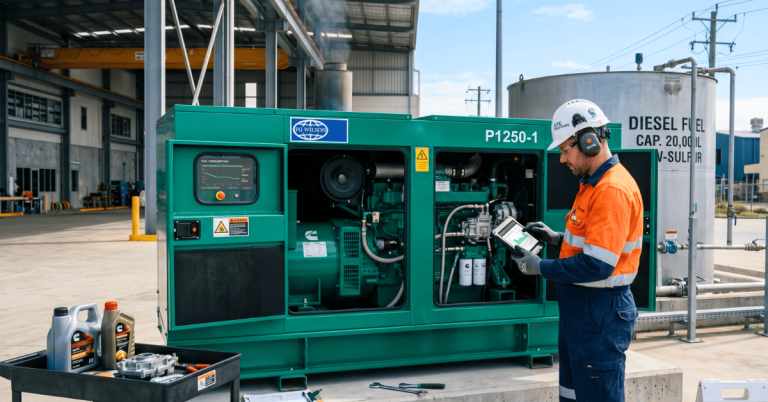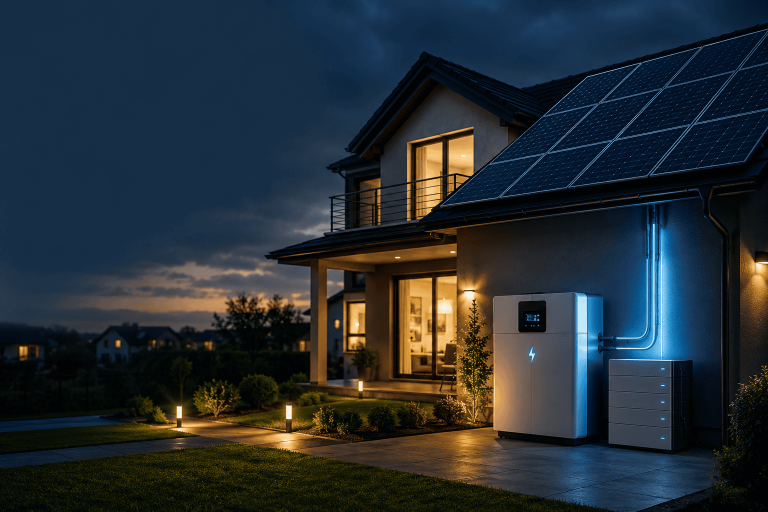
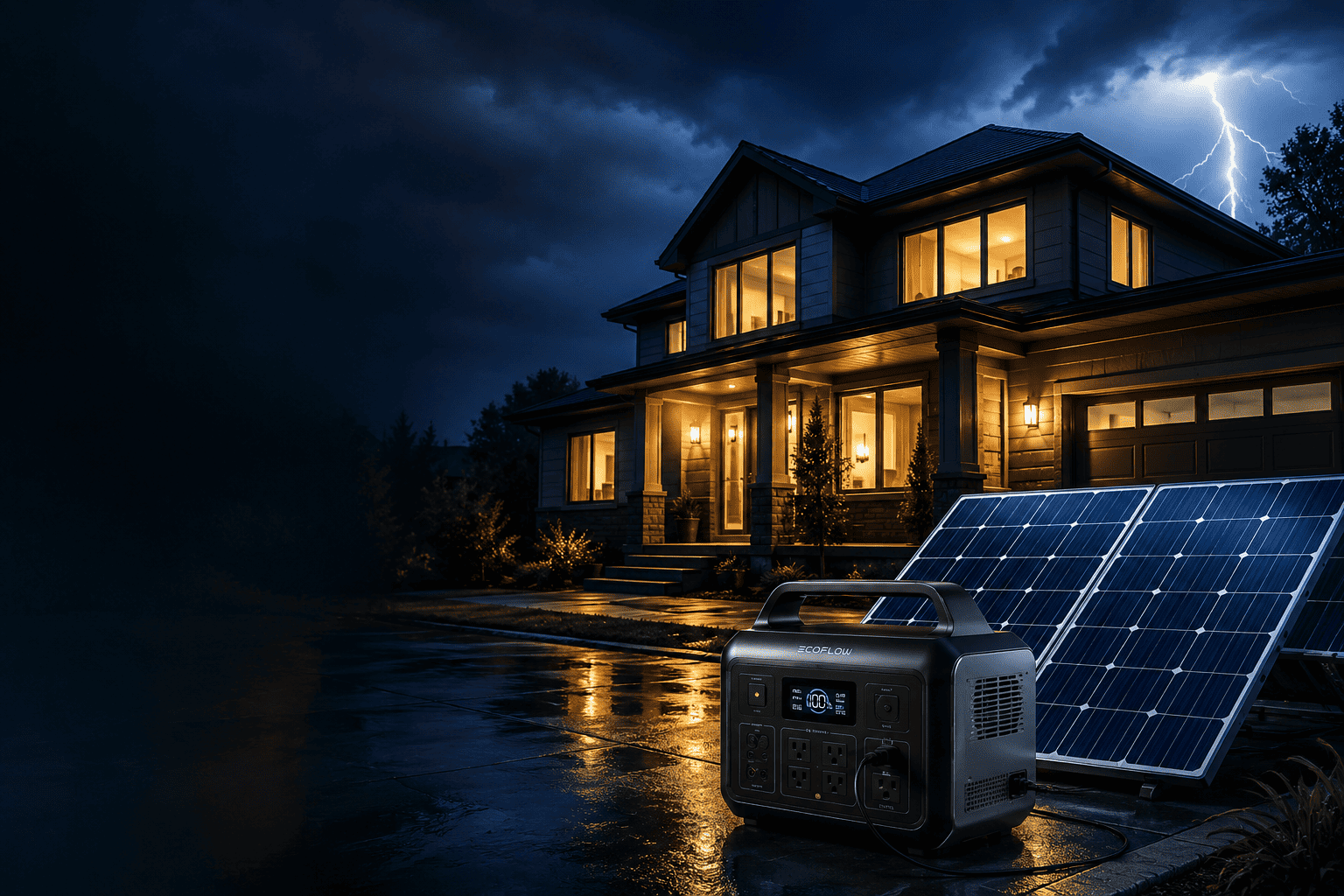
Power outages are becoming more common due to storms, grid failures, extreme weather, and rising electricity demand. For homeowners, losing power can disrupt daily life, damage electronics, spoil food, and create safety concerns. That is why many people are now searching for a reliable solar generator for house power outage situations.
Unlike traditional fuel generators, solar generators provide clean, quiet, and renewable backup power. They do not require gasoline or diesel and can continue charging using sunlight during extended outages. Whether you want to run lights, fans, Wi-Fi routers, refrigerators, or even essential medical equipment, modern solar generators can provide dependable emergency energy for homes.
This guide explains everything homeowners need to know about solar backup systems, including how they work, how many watts solar to power a house, and whether solar generators can truly power an entire home.
What Is a Solar Generator for House Power Outage?
A solar generator is a portable or stationary backup power system that stores electricity in batteries and charges using solar panels.
A typical solar generator includes:
- Solar panels
- Battery storage system
- Inverter
- Charge controller
- Output ports and AC outlets
During a blackout, the stored energy powers household appliances and devices without noise or fuel consumption.
Unlike conventional generators, solar generators:
- Produce no harmful fumes
- Require less maintenance
- Operate silently
- Use renewable solar energy
- Can recharge during long outages
This makes them ideal for modern homeowners looking for cleaner and safer emergency backup power.
How Solar Generators Work
Solar generators collect sunlight through solar panels and convert it into electricity. The energy is stored inside rechargeable batteries for later use.
The process works in four simple steps:
1. Solar Panels Capture Sunlight
Solar panels absorb sunlight and generate DC electricity.
2. Charge Controller Regulates Power
The charge controller safely manages the electricity flow to protect the battery.
3. Battery Stores Energy
The stored energy becomes available for use during outages or nighttime.
4. Inverter Converts Power
The inverter changes DC power into AC electricity used by home appliances.
This system allows homeowners to use stored solar energy whenever grid electricity fails.
Can Solar Generators Power a House?
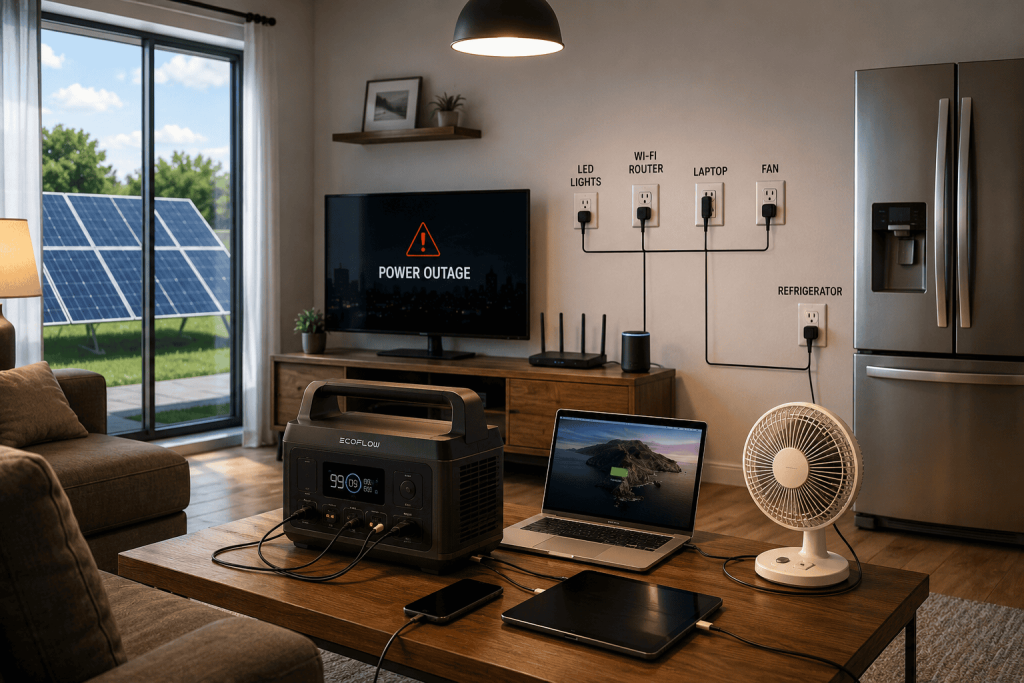
One of the most common questions homeowners ask is: can solar generators power a house?
The answer depends on:
- Generator capacity
- Battery size
- Appliance wattage
- Number of devices used
- Duration of outage
Small solar generators can power:
- LED lights
- Mobile phones
- Laptops
- Wi-Fi routers
- Fans
- TVs
Medium-sized systems can additionally run:
- Refrigerators
- CPAP machines
- Microwave ovens
- Washing machines
Large whole-home solar generators may power:
- Air conditioners
- Water pumps
- Home office systems
- Kitchen appliances
- Multiple rooms simultaneously
However, running an entire house continuously requires a high-capacity battery bank and larger solar panel setup.
What Appliances Can Run on a Solar Generator?
The appliances supported depend on total wattage and surge requirements.
| Appliance | Approximate Watts |
|---|---|
| LED Bulb | 10W |
| Ceiling Fan | 60W–90W |
| Wi-Fi Router | 10W–20W |
| Laptop | 50W–100W |
| Refrigerator | 150W–800W |
| Television | 80W–250W |
| Microwave | 800W–1500W |
| Air Conditioner | 1000W–3500W |
A properly sized solar generator for house power outage emergencies can handle essential appliances comfortably.
How Many Watts Solar to Power a House?
Many homeowners wonder how many watts solar to power a house effectively.
The answer depends on daily electricity consumption.
Small Homes
- Typical requirement: 3000W–5000W
- Supports lights, fans, TV, refrigerator, and internet
Medium Homes
- Typical requirement: 5000W–8000W
- Supports kitchen appliances and multiple rooms
Large Homes
- Typical requirement: 10000W+
- Supports HVAC systems and heavy appliances
To estimate your needs:
- List all appliances
- Add their running wattage
- Calculate daily usage hours
- Include surge power requirements
For emergency backup, most homeowners prioritize essential appliances instead of powering the entire house.
Are There Solar Powered Generators for Home Use?
Yes, there are many solar powered generators for home use available today.
Modern systems range from portable compact units to whole-house backup systems.
Portable Solar Generators
Best for:
- Small apartments
- Camping
- Emergency essentials
- Short outages
Mid-Size Home Backup Systems
Best for:
- Refrigerators
- Home offices
- Entertainment systems
- Basic household needs
Whole-House Solar Generators
Best for:
- Large homes
- Long outages
- Off-grid living
- Full-home backup power
These systems often integrate with home electrical panels for seamless operation.
Solar Generator vs Fuel Generator Comparison
| Feature | Solar Generator | Fuel Generator |
|---|---|---|
| Fuel Requirement | No | Yes |
| Noise | Silent | Loud |
| Maintenance | Low | High |
| Emissions | Zero | Produces fumes |
| Indoor Use | Safer | Dangerous |
| Operating Cost | Low | High fuel costs |
| Recharge Method | Sunlight | Refueling |
| Environmental Impact | Eco-friendly | Polluting |
Solar generators are increasingly preferred because they provide cleaner and quieter emergency power
Benefits of Solar Generators for Home Use
Clean Energy
Solar generators use renewable energy from the sun without producing pollution.
Quiet Operation
Unlike noisy fuel generators, solar systems operate silently.
Lower Long-Term Costs
Although initial costs may be higher, there are no ongoing fuel expenses.
Minimal Maintenance
No oil changes or engine servicing are required.
Indoor Safety
Since they do not emit toxic gases, many units are safer for indoor or garage use.
Energy Independence
Solar generators reduce dependence on unstable electrical grids.
Limitations Homeowners Should Know
Despite their benefits, solar generators also have limitations.
Higher Initial Investment
Quality systems can be expensive upfront.
Weather Dependency
Charging speed decreases during cloudy or rainy conditions.
Limited Heavy Appliance Support
Smaller systems cannot run high-energy appliances continuously.
Battery Capacity Limits
Stored energy eventually runs out if solar charging is unavailable.
Understanding these limitations helps homeowners choose realistic backup expectations.
Best Use Cases During Emergencies
A generator for house power outage situations becomes especially useful during:
- Storm-related blackouts
- Cyclones and hurricanes
- Flood emergencies
- Heatwaves
- Remote living
- Medical device support
- Work-from-home outages
Solar generators provide peace of mind when grid electricity becomes unreliable
Buying Guide for Choosing the Right Solar Generator
Choosing the right system requires careful planning.
1. Determine Your Power Needs
Calculate the total wattage of essential appliances.
2. Check Battery Capacity
Higher battery capacity provides longer runtime.
3. Evaluate Inverter Output
Ensure the inverter can handle appliance startup surges.
4. Consider Expandability
Some systems allow adding extra batteries and solar panels.
5. Look for Fast Charging
Efficient charging becomes critical during extended outages.
6. Portability vs Whole-Home Backup
Portable systems are easier to move, while whole-home systems provide larger backup capacity.
Maintenance and Battery Lifespan
Solar generators require relatively little maintenance.
Maintenance Tips
- Keep solar panels clean
- Store batteries properly
- Avoid extreme temperatures
- Follow manufacturer charging guidelines
Battery Lifespan
Most modern lithium batteries last:
- 5–15 years
- 2000–6000 charge cycles
Proper maintenance significantly extends system life.
Cost Analysis and Long-Term Savings
The cost of a solar generator for house power outage backup depends on capacity and features.
Estimated Price Ranges
| System Type | Approximate Cost |
|---|---|
| Small Portable Unit | $300–$1000 |
| Mid-Size Home Backup | $1000–$5000 |
| Whole-Home System | $5000–$20000+ |
Long-Term Savings
Homeowners save money through:
- Reduced fuel purchases
- Lower maintenance expenses
- Reduced electricity usage
- Potential energy independence
Over time, solar systems can become financially beneficial compared to fuel generators.
Environmental Benefits
Solar generators support cleaner and more sustainable energy use.
Key Environmental Advantages
- Zero carbon emissions during operation
- Reduced fossil fuel dependence
- Less air pollution
- Lower noise pollution
- Renewable energy utilization
As more homeowners adopt renewable backup solutions, environmental impact decreases significantly.
Tips to Maximize Solar Generator Efficiency
Use Energy-Efficient Appliances
LED bulbs and efficient refrigerators reduce power consumption.
Prioritize Essential Devices
Avoid running unnecessary appliances during outages.
Charge Before Storms
Keep batteries fully charged when bad weather is expected.
Optimize Solar Panel Placement
Direct sunlight improves charging efficiency.
Monitor Energy Usage
Tracking usage prevents battery depletion.
Common Mistakes to Avoid
Buying an Undersized Generator
Many homeowners underestimate their actual power needs.
Ignoring Surge Wattage
Appliances like refrigerators require higher startup power.
Poor Solar Panel Placement
Shaded panels reduce charging performance.
Overloading the System
Exceeding inverter capacity can damage equipment.
Future of Solar Backup Power
The future of residential backup energy is increasingly solar-focused.
Advancements in battery technology, inverter efficiency, and solar panel performance are making solar generators more powerful and affordable.
Growing concerns about climate change and grid instability are also accelerating adoption worldwide.
Many experts believe solar generators will become a standard household backup solution in the coming years.
Frequently Asked Questions
What is the best solar generator for house power outage emergencies?
The best system depends on your home size, power requirements, battery capacity needs, and budget.
Can solar generators power a house completely?
Yes, large-capacity systems can power most or all household appliances, depending on energy usage.
How many watts solar to power a house?
Most homes require between 3000W and 10000W depending on appliance usage and home size.
Are there solar powered generators for home use?
Yes, many companies now offer portable and whole-house solar backup systems designed specifically for residential use.
How long do solar generators last?
Most quality systems last 10 years or more with proper maintenance.
Do solar generators work during cloudy weather?
Yes, but charging efficiency decreases during cloudy conditions.
Is a solar generator better than a fuel generator?
Solar generators are quieter, cleaner, and require less maintenance, while fuel generators may provide higher continuous power for heavy loads.
Conclusion
A solar generator for house power outage situations offers homeowners a cleaner, quieter, and more reliable alternative to traditional fuel generators. Whether you need emergency lighting, refrigeration, internet connectivity, or essential appliance backup, modern solar systems provide flexible solutions for nearly every home.
As technology improves and energy costs rise, solar backup power is becoming one of the smartest long-term investments for homeowners. Understanding can solar generators power a house, calculating how many watts solar to power a house, and choosing the correct system size are critical steps toward achieving dependable energy security.
Investing in a quality solar generator today can provide peace of mind, lower operating costs, and reliable backup power during future outages.