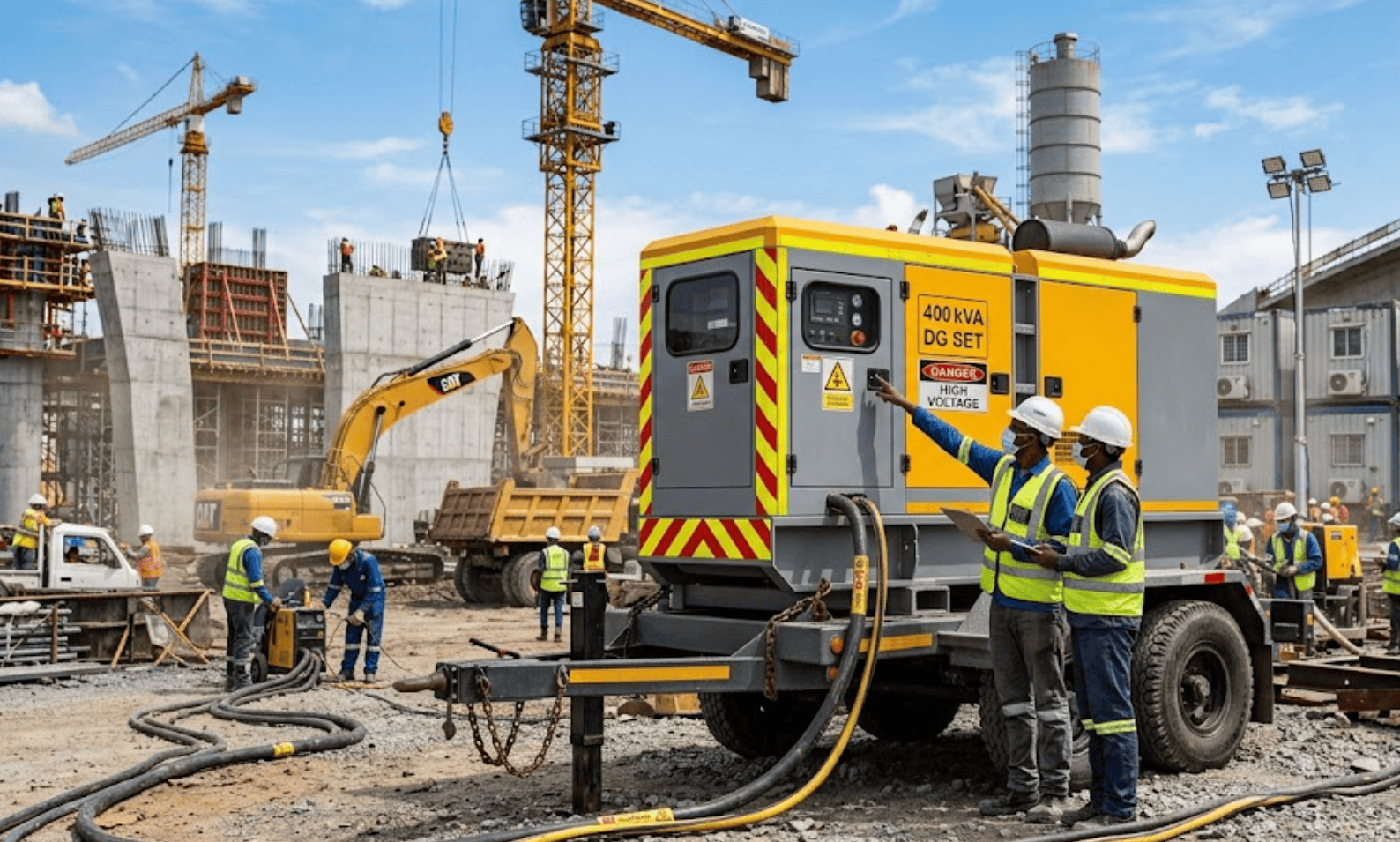
Power requirements are no longer limited to factories, commercial buildings, or permanent installations. Today’s industries frequently operate in locations where electrical infrastructure is either unavailable or still under development. Construction companies shift from one project to another, mining operations work in remote areas, government agencies establish temporary facilities, and event organizers create entire venues in open spaces where utility power simply does not exist. In such situations, a conventional stationary diesel generator is often impractical because relocating it repeatedly consumes both time and money.
This is where a Trolley Mounted DG Set becomes an ideal solution.
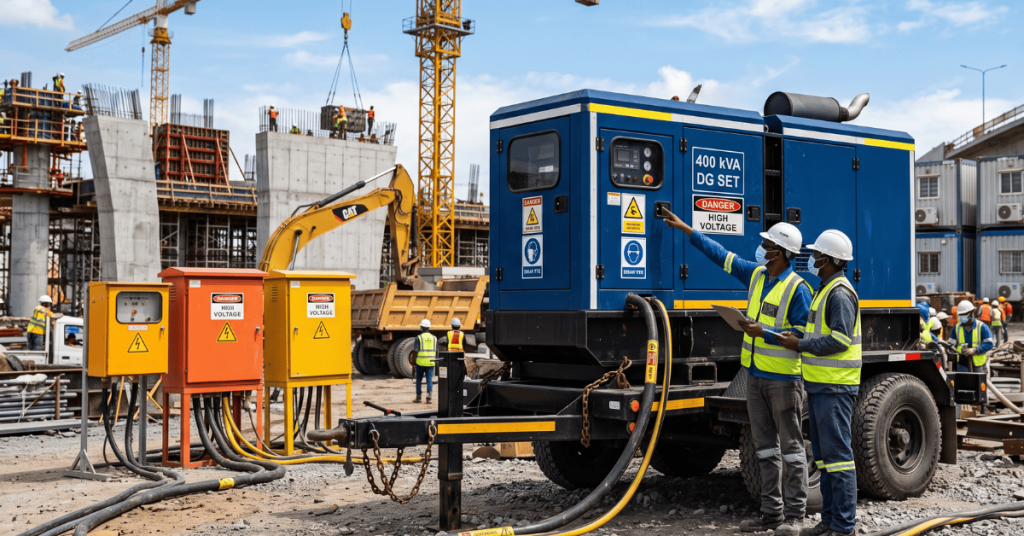
A trolley mounted diesel generator combines the dependable performance of a conventional diesel generator with the flexibility of mobility. Instead of being installed permanently on a concrete foundation, the complete generator is mounted on a specially designed heavy-duty trailer, allowing it to be transported safely from one location to another. Once it reaches the destination, it can be positioned, connected, and made operational within a short period, making it one of the most efficient temporary power solutions available today.
As India continues investing heavily in highways, metro rail projects, airports, renewable energy installations, smart cities, industrial parks, and rural infrastructure, the demand for mobile power generation continues to grow. Even large public sector organizations and government departments increasingly procure trolley mounted DG sets for industrial operations because they provide dependable electrical power wherever projects move. Recent procurement documents published by Bharat Heavy Electricals Limited (BHEL), for example, include 400 kVA trolley mounted DG sets along with commissioning, testing, spare parts, tools, and long-term maintenance support, demonstrating the importance of these generators in critical industrial applications.
Whether you are planning a construction project, looking for emergency backup power, supporting mining equipment, or searching for a mobile generator that can serve multiple locations throughout the year, understanding how a trolley mounted DG set works can help you make a smarter investment.
In this guide, we’ll explain everything you need to know—from its working principle and major components to its advantages, applications, maintenance, and buying considerations—so you can choose the right generator with confidence.
What is a Trolley Mounted DG Set?
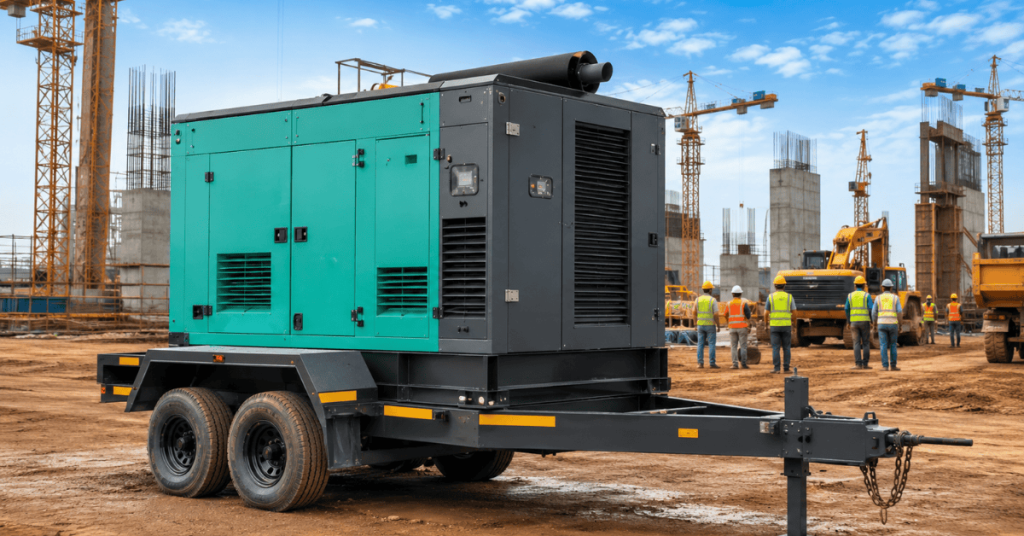
A Trolley Mounted DG Set is a diesel-powered electricity generating system permanently installed on a specially manufactured trailer or wheeled chassis instead of a fixed foundation. Since the entire generator is mounted on a movable platform, it can easily be transported using a suitable towing vehicle whenever electrical power is required at a different location.
You may also hear it referred to as a Mobile DG Set, Trailer Mounted Diesel Generator, or Portable Industrial Generator. Although these names differ slightly, they all describe the same concept—a diesel generator designed specifically for mobility.
Unlike portable household generators that supply only limited power, industrial trolley mounted generators are capable of delivering substantial electrical output. They are available in capacities ranging from around 15 kVA for small applications to more than 1000 kVA for heavy industrial use. This makes them suitable for everything from temporary site offices to large construction projects and manufacturing facilities.
The operating principle remains exactly the same as a conventional diesel generator. A diesel engine produces mechanical energy, which drives an alternator to generate electrical power. The difference lies in how the equipment is installed. Because everything is integrated onto a trailer—including the engine, alternator, fuel tank, control panel, batteries, and acoustic enclosure—the generator becomes a self-contained mobile power station.
This mobility offers tremendous flexibility. Instead of investing in several fixed generators for different locations, businesses can relocate one high-quality generator wherever power is required, significantly reducing capital expenditure while improving equipment utilization.
Why Businesses Prefer Mobile Diesel Generators
In today’s project-driven economy, flexibility has become just as important as reliability.
Many businesses no longer operate from a single location throughout the year. Construction contractors complete one project before moving to another. Infrastructure companies work across multiple cities. Mining operations shift according to excavation schedules. Telecom companies install temporary communication towers. Event organizers create venues that exist only for a few days.
Installing a permanent generator at every location simply isn’t practical.
A trolley mounted DG set solves this problem by making power mobile.
Instead of waiting for grid connectivity or arranging expensive temporary electrical infrastructure, project teams can tow the generator directly to the worksite and begin operations almost immediately. Once the project is completed, the same generator can be transported to the next location without major dismantling or installation work.
This flexibility translates directly into lower project costs, faster commissioning, improved productivity, and better utilization of expensive capital equipment.
For organizations handling multiple projects simultaneously, a mobile generator often becomes one of the most valuable assets in their equipment fleet.
How Does a Trolley Mounted DG Set Work?
Although its appearance differs from a stationary generator, the working principle remains exactly the same.
The process begins inside the diesel engine, where fuel is injected into the combustion chamber and ignited under high compression. The resulting combustion produces mechanical energy that rotates the engine crankshaft.
This rotational energy is transferred directly to the alternator.
Inside the alternator, electromagnetic induction converts mechanical rotation into electrical energy, producing alternating current (AC) that can be supplied to electrical equipment connected to the generator.
An Automatic Voltage Regulator (AVR) continuously maintains stable output voltage, even when connected loads change suddenly. At the same time, the engine governor controls engine speed to ensure the generator maintains the required operating frequency, typically 50 Hz in India.
Modern digital controllers constantly monitor important operating parameters such as:
- Engine oil pressure
- Coolant temperature
- Battery voltage
- Generator voltage
- Frequency
- Current
- Power factor
- Running hours
- Fuel level
If any parameter exceeds safe operating limits, the protection system automatically shuts down the engine to prevent costly damage.
The biggest advantage is that this entire power generation system remains permanently mounted on the trailer. Once the project location changes, operators simply disconnect the electrical cables, tow the generator to the new site, reconnect it, and resume operation.
Major Components of a Trolley Mounted DG Set
Every component inside a trolley mounted diesel generator plays an important role in delivering dependable electrical power. While mobility is its most visible feature, the overall engineering is similar to that of any industrial generator.
The diesel engine serves as the primary source of mechanical power. It is designed for continuous operation under demanding conditions and is generally selected based on fuel efficiency, reliability, emissions compliance, and maintenance requirements.
Coupled directly to the engine is the alternator, which converts mechanical energy into usable electrical power. High-quality alternators provide stable voltage regulation and excellent efficiency while handling varying electrical loads without significant fluctuations.
The digital control panel acts as the brain of the entire system. Modern controllers display engine performance, electrical parameters, alarms, fault history, and maintenance reminders while providing comprehensive protection against abnormal operating conditions.
Another important component is the fuel tank. Since many generators operate in remote locations, manufacturers often provide large-capacity fuel tanks that allow continuous operation for extended periods before refuelling becomes necessary.
To protect the equipment from harsh weather conditions, most generators are enclosed within an acoustic canopy. Besides reducing operating noise, the canopy protects the engine, alternator, and electrical components from dust, rain, and direct sunlight.
Perhaps the most distinctive component is the trailer assembly itself. Built using heavy structural steel, it supports the entire generator while allowing safe transportation over different types of roads and construction sites. Heavy-duty suspension systems, towing arrangements, parking brakes, stabilizing jacks, and rugged tyres ensure the generator remains stable both during transportation and operation.
Where Are Trolley Mounted DG Sets Used?
One of the biggest reasons behind the growing popularity of trolley mounted DG sets is their versatility. Unlike fixed generators that remain confined to a single location, these mobile power systems can be deployed wherever reliable electricity is required. Their flexibility makes them valuable across numerous industries, especially those where work locations change frequently.
The construction industry is perhaps the largest user of trolley mounted diesel generators. Before permanent electricity becomes available, contractors need dependable power for batching plants, tower cranes, welding machines, concrete mixers, lighting towers, compressors, pumps, and site offices. Instead of arranging temporary utility connections for every stage of construction, a mobile DG set provides an immediate and reliable power source.
Infrastructure projects such as highways, bridges, metro rail corridors, railway electrification, airports, and irrigation canals also depend heavily on mobile generators. Since these projects progress continuously over long distances, the generator can simply move along with the work, eliminating repeated installation costs.
Mining operations present another ideal application. Many mining sites are located in remote regions where grid electricity is either unavailable or highly unreliable. Mobile diesel generators provide continuous power for excavation equipment, crushing plants, dewatering pumps, conveyor systems, workshops, and temporary accommodation facilities.
Oil and gas exploration companies also rely on trolley mounted generators because drilling locations frequently change. Similarly, renewable energy developers use mobile generators while constructing solar parks and wind farms before permanent electrical infrastructure is commissioned.
The usefulness of trolley mounted DG sets extends beyond industrial projects. Disaster management authorities, emergency response teams, hospitals, military establishments, telecom companies, and public utility departments often deploy mobile generators during floods, cyclones, earthquakes, and other emergency situations where restoring electrical power quickly becomes critical.
Event organizers also appreciate the flexibility of mobile generators. Concerts, exhibitions, trade fairs, sports tournaments, religious gatherings, and outdoor festivals require dependable electricity for lighting, sound systems, food stalls, broadcasting equipment, security systems, and temporary offices. Since these events are temporary by nature, a trolley mounted DG set offers the perfect solution.
Simply put, if electricity is required at multiple locations throughout the year, a trolley mounted generator is usually a smarter investment than several stationary generators.
Why Are Trolley Mounted DG Sets Becoming Increasingly Popular?
The modern business environment demands flexibility. Projects move faster, deadlines become tighter, and companies constantly look for ways to reduce costs without compromising reliability.
A trolley mounted DG set supports all these objectives.
Instead of being restricted to a single installation, one generator can serve multiple projects across different cities or even different states. This alone significantly improves equipment utilization and reduces capital investment.
Another reason for their popularity is reduced installation time. A stationary generator requires civil work, foundations, alignment, and often considerable site preparation before it can begin operation. A trolley mounted generator, on the other hand, arrives almost ready to use. Once positioned safely, connected properly, and inspected, it can begin supplying electricity within a very short period.
This rapid deployment is particularly valuable during emergencies. Hospitals, disaster response teams, municipal authorities, and industrial facilities cannot afford long power interruptions. Being able to transport reliable backup power quickly often makes a significant operational difference.
Modern mobile generators are also remarkably dependable. Improved engine technology, digital control systems, advanced alternators, acoustic canopies, and intelligent protection features have made today’s trolley mounted DG sets more efficient, quieter, and easier to maintain than ever before.
For many organizations, mobility is no longer considered an additional feature—it has become a business necessity.
Advantages of a Trolley Mounted DG Set
The benefits of a trolley mounted diesel generator extend far beyond simple transportation. It is a practical power solution that improves operational efficiency while reducing both installation time and overall project costs.
The most obvious advantage is mobility. Since the complete generating system is installed on a robust trailer, the equipment can easily be moved between different sites without dismantling the engine or alternator. Businesses handling multiple projects can therefore utilize the same generator throughout the year instead of purchasing separate units for each location.
Another important benefit is faster project execution. Temporary electrical infrastructure often delays project commencement, particularly at remote sites. A trolley mounted generator eliminates this dependency by providing immediate electrical power from the first day of operation.
Cost savings also become evident over time. Although the initial purchase price may be similar to a stationary generator of comparable capacity, the ability to reuse the same generator at multiple locations reduces the overall cost of ownership. Fewer generators need to be purchased, maintained, insured, and serviced.
Operational flexibility is another major advantage. Construction companies, infrastructure developers, and industrial contractors rarely know exactly how long a project will continue or where the next assignment will be located. A mobile generator adapts easily to these changing requirements.
Modern trolley mounted DG sets also offer excellent safety features. Digital controllers continuously monitor engine health, electrical performance, battery condition, coolant temperature, lubrication pressure, and operating hours. Automatic shutdown systems help prevent major engine damage during abnormal operating conditions.
Because these generators are generally supplied with acoustic canopies, they also produce considerably lower noise levels than open generators. This makes them suitable for projects located near residential areas, hospitals, educational institutions, and commercial developments where environmental regulations must be followed.
Perhaps the greatest advantage, however, is peace of mind. Knowing that dependable electrical power can accompany your project wherever it moves provides operational confidence that stationary installations simply cannot match.
Choosing the Right Capacity
One of the most common mistakes buyers make is selecting a generator based only on price rather than actual power requirements.
An undersized generator may overload frequently, resulting in voltage fluctuations, engine stress, excessive fuel consumption, and reduced equipment life. Conversely, an oversized generator often operates at very light loads, leading to poor fuel efficiency, wet stacking, carbon deposits, and unnecessary operating expenses.
The ideal generator capacity should be determined by calculating the total connected electrical load together with motor starting currents and any future expansion requirements.
For smaller commercial sites, capacities between 15 kVA and 82.5 kVA are often sufficient.
Medium-sized construction projects typically require generators ranging from 125 kVA to 250 kVA.
Larger infrastructure developments, manufacturing facilities, mining operations, and government projects frequently utilize generators between 320 kVA and 500 kVA.
Very large industrial applications may require capacities of 625 kVA, 750 kVA, or even above 1000 kVA depending on connected equipment.
It is always advisable to consult an experienced generator specialist before finalizing the capacity, as proper sizing directly affects reliability, fuel economy, and long-term operating costs.
Important Technical Features to Consider
Purchasing a trolley mounted DG set should never be based solely on engine horsepower or generator capacity. Several technical features contribute significantly to overall performance and operating reliability.
The engine should be manufactured by a reputed company with a proven service network and readily available spare parts. Reliable after-sales support becomes particularly important for organizations operating generators in remote areas.
The alternator should provide stable voltage regulation and maintain good power quality under changing electrical loads. Industrial applications often include motors, pumps, compressors, and electronic equipment that require consistent voltage for safe operation.
A modern digital controller should include comprehensive monitoring functions, maintenance reminders, event logging, alarm history, automatic shutdown protection, and communication capability for remote supervision.
Fuel tank capacity also deserves careful consideration. Projects located far from fuel stations benefit greatly from larger fuel tanks that reduce refuelling frequency and improve operating efficiency.
Since the generator will be transported regularly, the trailer itself should be constructed using heavy-duty structural steel with high-quality suspension, dependable braking systems, properly rated tyres, corrosion-resistant finishing, and secure towing arrangements.
Weather protection is equally important. A durable acoustic enclosure not only reduces noise but also protects sensitive components from rain, dust, sunlight, and harsh environmental conditions.
Finally, buyers should verify compliance with applicable emission regulations, electrical safety standards, and local statutory requirements before making their purchasing decision.
Trolley Mounted DG Set vs Stationary DG Set
Many buyers wonder whether they should purchase a stationary diesel generator or a trolley mounted model. The answer depends almost entirely on how the generator will be used.
If your generator will remain permanently installed at a factory, hospital, office building, shopping mall, or residential complex, a stationary generator usually represents the better option. Once installed, it provides years of reliable service without the need for transportation.
However, if your business operates at changing project locations, mobility becomes a decisive advantage.
A trolley mounted generator allows you to transport the complete power system wherever it is required. There is no need to construct new foundations, dismantle heavy equipment, or invest in multiple generators for different sites.
Many contractors initially purchase a stationary generator because it appears simpler, only to discover later that relocating it becomes both expensive and time-consuming. In contrast, businesses that invest in a trolley mounted DG set often appreciate the flexibility it provides as projects expand into new locations.
Ultimately, the right choice depends not only on today’s requirements but also on where your business is likely to be operating over the next five to ten years.
Maintenance Tips to Maximize the Life of Your Trolley Mounted DG Set
A trolley mounted DG set is often expected to perform in demanding environments where dust, vibration, heat, moisture, and long operating hours are part of everyday work. While these generators are built for rugged applications, their long-term reliability depends largely on regular maintenance.
One of the simplest yet most effective practices is carrying out a quick inspection before every startup. Checking engine oil level, coolant level, fuel availability, battery condition, radiator cleanliness, and electrical connections takes only a few minutes but can prevent expensive repairs later.
Engine oil should always be replaced according to the manufacturer’s recommended service interval. Fresh lubricating oil minimizes friction, reduces internal wear, and improves overall engine efficiency. At the same time, replacing oil filters ensures contaminants do not circulate inside the engine.
Air filters deserve special attention, especially on construction and mining sites. Dust entering the engine can reduce combustion efficiency, increase fuel consumption, and accelerate component wear. Cleaning or replacing clogged air filters at the recommended intervals helps maintain optimum performance.
The cooling system should also be inspected regularly. Overheating remains one of the most common causes of diesel engine failure, yet it is often completely preventable through proper coolant maintenance and radiator cleaning.
Battery terminals should be kept clean and free from corrosion to ensure reliable engine starting. Electrical cables, earthing connections, and control panel indicators should also be inspected periodically to maintain operational safety.
Since the generator is transported frequently, the trailer itself requires maintenance as well. Tyres should be checked for correct air pressure and wear, wheel bearings should be lubricated as required, and towing arrangements, brakes, suspension components, and stabilizer legs should be inspected before moving the generator to another location.
A preventive maintenance program not only extends equipment life but also reduces unexpected breakdowns, lowers operating costs, improves fuel efficiency, and increases overall reliability.
Industry Trends: The Future of Mobile Diesel Power
As industries continue to expand into remote locations and infrastructure projects become increasingly dynamic, mobile power generation is expected to remain an important part of the construction and industrial sectors.
Modern trolley mounted DG sets are becoming smarter with the integration of IoT-enabled controllers, GPS tracking, cloud-based monitoring, and predictive maintenance systems. Fleet owners can now monitor fuel consumption, engine health, operating hours, and fault conditions remotely, helping improve utilization and reduce downtime.
Manufacturers are also focusing on improved fuel efficiency, reduced emissions, quieter operation, and enhanced safety features to comply with evolving environmental regulations.
Although renewable energy is growing rapidly, diesel generators continue to play a vital role wherever uninterrupted power is essential or grid connectivity is unavailable. Increasingly, trolley mounted DG sets are being used alongside solar power systems and battery energy storage solutions, creating hybrid power systems that improve overall efficiency while reducing fuel consumption.
These developments indicate that trolley mounted generators will continue to evolve, offering better performance, smarter controls, and lower operating costs in the years ahead.
Buying Checklist Before Purchasing a Trolley Mounted DG Set
Before investing in a trolley mounted diesel generator, ask yourself the following questions:
- What is my total connected electrical load?
- Will the generator operate continuously or only during power failures?
- How frequently will the generator be relocated?
- Is the trailer suitable for the roads and terrain where it will operate?
- Does the supplier provide installation assistance and operator training?
- Are genuine spare parts easily available?
- Is there an authorized service centre near my project locations?
- Does the generator comply with applicable CPCB and emission standards?
- Is the acoustic canopy suitable for my operating environment?
- What warranty and Annual Maintenance Contract (AMC) options are available?
A little planning before purchase can save considerable operating costs throughout the life of the generator.
Frequently Asked Questions (FAQs)
What is a trolley mounted DG set?
A trolley mounted DG set is a diesel-powered generator permanently installed on a heavy-duty trailer, allowing it to be transported easily between different locations while providing reliable electrical power.
Where are trolley mounted generators commonly used?
They are widely used in construction projects, mining operations, infrastructure development, metro rail projects, road construction, industrial shutdowns, disaster management, outdoor events, telecom installations, and temporary power applications.
What is the difference between a trolley mounted DG set and a stationary generator?
A stationary generator remains permanently installed at one location, whereas a trolley mounted DG set can be moved from one site to another without dismantling the equipment.
Can a trolley mounted generator operate continuously?
Yes. Industrial trolley mounted generators are designed for continuous operation provided they receive proper maintenance and operate within their rated capacity.
Which generator capacity is most commonly used?
The required capacity depends entirely on the connected electrical load. However, 125 kVA, 250 kVA, 320 kVA, and 400 kVA generators are among the most popular choices for industrial and infrastructure projects.
How is a trolley mounted DG set transported?
It is transported using a suitable towing vehicle connected to the trailer’s towing arrangement. Before transportation, electrical connections should be disconnected and all safety procedures followed.
Does a trolley mounted DG set require a concrete foundation?
No. One of its biggest advantages is that it can operate without permanent civil foundations, making it ideal for temporary projects.
Are acoustic canopies available?
Yes. Most modern trolley mounted generators are supplied with weatherproof acoustic enclosures that reduce operating noise while protecting internal components from environmental conditions.
Is fuel consumption higher than a stationary generator?
No. Fuel consumption primarily depends on engine efficiency, generator capacity, and connected load. Mobility does not significantly affect fuel efficiency.
Can a trolley mounted DG set be used for emergency backup?
Absolutely. Many hospitals, industries, municipal authorities, telecom operators, and emergency response organizations use mobile generators during power outages and disaster recovery operations.
How often should maintenance be carried out?
Daily inspections should be performed during operation, while scheduled preventive maintenance should follow the manufacturer’s recommended service intervals.
How long does a quality trolley mounted DG set last?
With proper maintenance and responsible operation, a high-quality industrial generator can provide reliable service for many years, often exceeding tens of thousands of operating hours.
Conclusion
A Trolley Mounted DG Set is much more than a diesel generator on wheels. It is a flexible, dependable, and cost-effective power solution designed for organizations that require electricity wherever their work takes them. Whether supporting construction projects, mining operations, infrastructure development, emergency services, or temporary industrial facilities, mobile generators deliver the reliability of a conventional DG set together with the convenience of transportation.
Choosing the right generator involves more than simply selecting a power rating. Factors such as fuel efficiency, engine quality, alternator performance, trailer construction, after-sales service, spare parts availability, and maintenance support all contribute to long-term reliability and operating economy.
If your projects regularly move between locations, investing in a quality trolley mounted DG set can improve equipment utilization, reduce project delays, and provide dependable electrical power whenever and wherever it is needed. A well-maintained generator is not merely an expense—it becomes a long-term asset that supports productivity, business continuity, and operational success.
Check DG SET CAPACITY CALCULATOR HERE