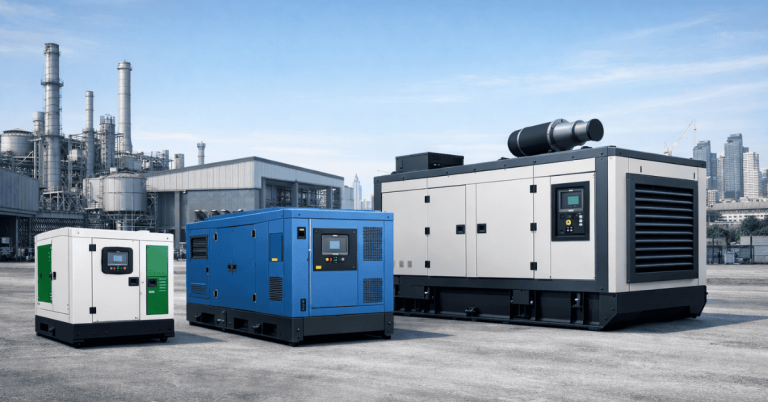
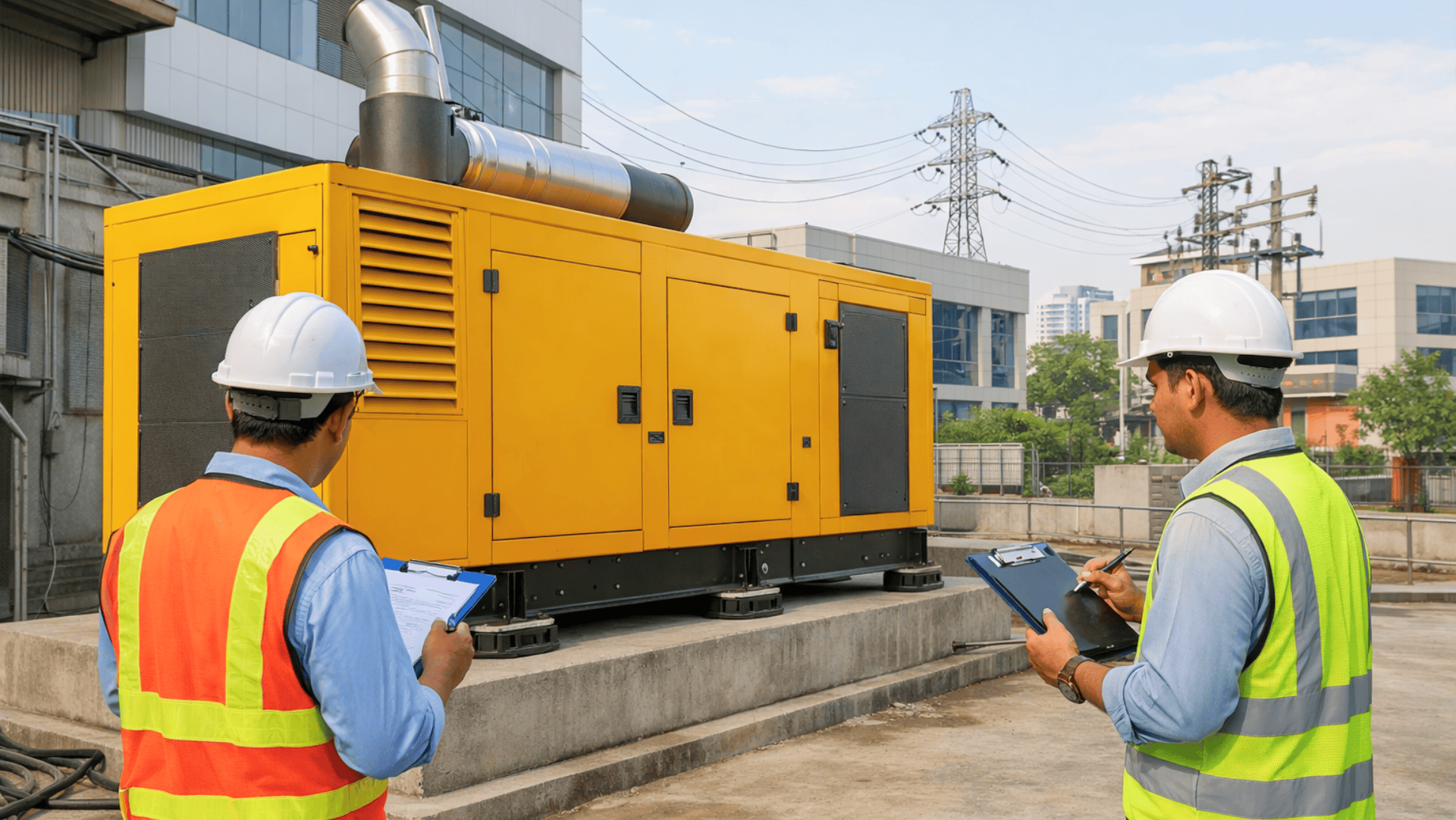
Diesel generators play a critical role in India’s power infrastructure. Despite major investments in grid power, many industries, hospitals, commercial buildings, data centers, construction sites, and residential complexes still depend on diesel generators for reliable backup electricity. Because of their widespread use, the Indian government has introduced several regulations to control emissions, noise pollution, and installation safety.
For international readers—particularly businesses, consultants, infrastructure developers, and equipment suppliers in the United States and other countries—understanding diesel generator installation rules in India is essential when planning projects or supplying generator equipment to the Indian market.
India’s regulatory framework for diesel generators focuses primarily on environmental protection, public safety, and noise control. Agencies such as the Central Pollution Control Board (CPCB), State Pollution Control Boards (SPCBs), and local municipal authorities enforce these regulations.
This guide provides a detailed overview of diesel generator installation rules in India, including emission standards, installation requirements, regulatory approvals, and best practices recommended by power infrastructure experts.
Overview of Diesel Generator Installation Rules in India
Diesel generator installation in India is governed by a combination of environmental regulations, electrical safety standards, and urban development rules. These regulations aim to reduce pollution, control noise levels, and ensure safe operation in both residential and commercial environments.
The main objectives of generator installation rules include:
- Controlling harmful emissions from diesel engines
- Reducing noise pollution in urban areas
- Ensuring safe installation and operation
- Preventing environmental hazards
- Maintaining public health standards
India has experienced rapid urbanization and industrial expansion over the past two decades. As a result, thousands of backup generators operate across cities, factories, IT parks, hospitals, and residential complexes.
To manage this widespread usage, the government introduced strict compliance standards for generator manufacturers, installers, and users.
Key Authorities Regulating Diesel Generator Installations
Central Pollution Control Board (CPCB)
The Central Pollution Control Board (CPCB) is the primary authority responsible for setting environmental standards related to diesel generators in India. CPCB defines emission limits, noise standards, and compliance guidelines for generator manufacturers and users.
The organization also certifies generator models that meet approved emission norms before they can be sold in the market.
State Pollution Control Boards (SPCB)
Each Indian state has its own State Pollution Control Board, responsible for enforcing CPCB guidelines at the regional level.
SPCBs may require facilities to obtain environmental clearances or No Objection Certificates (NOCs) before installing large diesel generator sets.
These boards also monitor:
- emission compliance
- air quality impact
- environmental permits
Local Municipal Authorities
Municipal corporations and city development authorities often regulate generator installation in residential and commercial buildings.
Local authorities may enforce requirements related to:
- placement of generators
- acoustic enclosures
- structural safety
- building permits
Electrical Inspectorate
The Electrical Inspectorate Department in each state ensures electrical safety compliance.
Generators connected to building electrical systems must follow approved electrical installation standards to prevent hazards such as short circuits, overloads, and fire risks.
CPCB Emission Norms for Diesel Generators
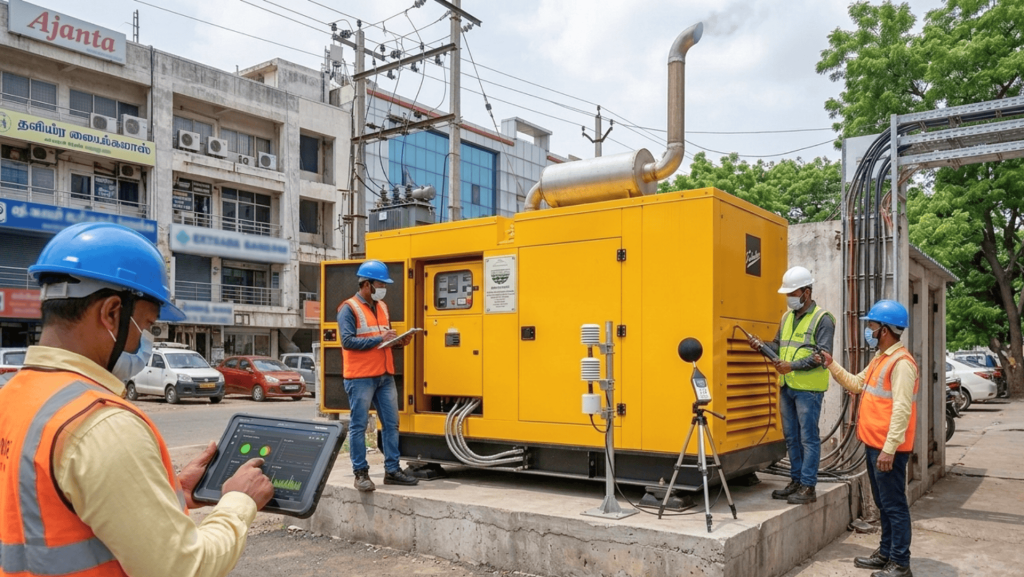
Emission norms are among the most important aspects of diesel generator installation rules in India.
The Central Pollution Control Board has introduced multiple emission standards over the years to reduce air pollution caused by diesel engines.
Diesel generators installed in India must comply with the latest CPCB emission regulations. For a detailed explanation of the latest emission standards, refer to our guide on CPCB DG Set Emission Standards 2026.
CPCB I Norms
CPCB I norms were among the earlier emission standards introduced for diesel generator sets. These norms aimed to regulate particulate matter and nitrogen oxide emissions from generator engines.
However, these standards have gradually been replaced by stricter requirements.
CPCB II Norms
CPCB II emission norms introduced more stringent limits on pollutants such as:
- Nitrogen Oxides (NOx)
- Hydrocarbons (HC)
- Carbon Monoxide (CO)
- Particulate Matter (PM)
Most modern generators manufactured after regulatory updates must comply with CPCB II emission standards.
CPCB IV+ Norms
India has recently introduced CPCB IV+ emission norms, which represent the most advanced environmental standards for diesel generators.
These norms significantly reduce particulate emissions and require improved engine technology, advanced combustion systems, and better fuel efficiency.
Generators compliant with CPCB IV+ norms are now widely recommended for commercial and industrial installations.
Noise Control Requirements for DG Sets
Noise pollution is another major concern addressed by diesel generator regulations.
Generator sets can produce significant noise during operation, which may disturb nearby residential areas, offices, and hospitals.
To control this issue, Indian regulations mandate the use of acoustic enclosures for most diesel generators.
Acoustic Enclosure Requirements
Acoustic enclosures are soundproof housings that reduce generator noise levels.
Modern DG sets are typically supplied with factory-designed acoustic canopies that meet CPCB noise standards.
Permissible Noise Limits
The CPCB specifies that generator noise levels should not exceed prescribed decibel limits measured at a defined distance from the generator.
Noise standards vary depending on the surrounding environment, such as residential, commercial, or industrial zones.
Distance from Buildings
Generators should be installed at appropriate distances from living spaces, offices, and sensitive facilities to minimize noise impact.
In many cases, sound barriers or additional insulation may be required.
Location and Placement Rules for DG Sets
Proper placement is an essential component of safe generator installation.
The location of a generator affects safety, ventilation, noise levels, and emission dispersion.
Proper exhaust stack height is important to ensure safe dispersion of diesel fumes and compliance with pollution control regulations. Learn more about the official requirements in our article on CPCB norms for DG set exhaust height.
Residential Buildings
In residential complexes, diesel generators are typically installed in dedicated service areas, basements, or outdoor utility zones.
Installers must ensure:
- adequate ventilation
- controlled noise levels
- safe fuel storage
Commercial Complexes
Shopping malls, office buildings, and hotels frequently rely on large generator sets.
These generators should be placed in designated utility spaces designed with proper airflow, exhaust routing, and fire protection systems.
Hospitals
Hospitals require uninterrupted power supply for critical medical equipment.
Generator installations in hospitals must meet additional reliability and safety requirements, including redundancy systems and automatic transfer switches.
Industrial Facilities
Factories and manufacturing plants often operate large DG sets to support production processes.
Industrial installations typically require larger generator foundations, dedicated exhaust systems, and strict environmental compliance.
Mandatory Documents and Approvals Required
Before installing a diesel generator in India, several approvals may be required depending on generator capacity and location.
Common regulatory approvals include:
Pollution Control Board NOC
Facilities may need to obtain a No Objection Certificate (NOC) from the State Pollution Control Board to ensure compliance with environmental regulations.
Electrical Inspector Approval
Generators connected to building electrical systems must follow electrical safety standards and may require inspection or certification.
Building Authority Clearance
Commercial or residential buildings installing generators may need approval from local municipal authorities.
Environmental Clearance for Large Generators
Large industrial generators may require environmental clearance under the Environmental Protection Act.
Installation Best Practices Recommended by Experts
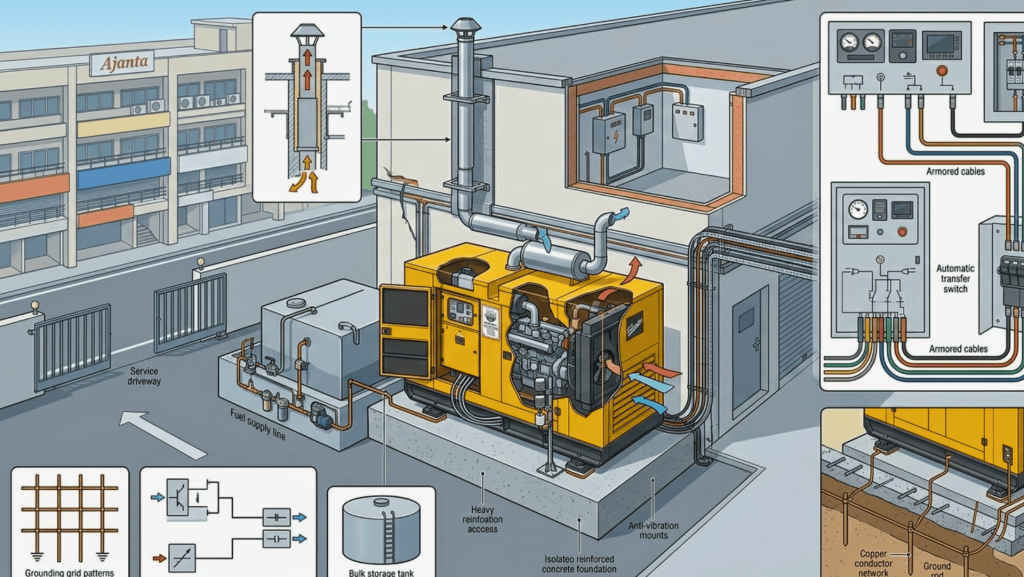
Beyond regulatory compliance, industry experts recommend several best practices to ensure safe and efficient diesel generator operation.
Generator exhaust systems must also follow government guidelines regarding stack height to reduce air pollution. You can read the complete explanation of CPCB norms for DG set stack height in our detailed guide.
Foundation Design
Generators should be installed on properly designed concrete foundations capable of supporting the equipment weight and absorbing vibrations.
Ventilation and Airflow
Adequate ventilation is necessary to prevent overheating and ensure efficient engine performance.
Generator rooms must allow sufficient airflow for combustion and cooling.
Exhaust System Design
Exhaust gases should be directed through properly designed piping systems to prevent accumulation of harmful fumes in enclosed spaces.
Exhaust outlets should also be positioned to avoid impacting nearby buildings.
Fuel Storage Safety
Diesel fuel storage must follow safety regulations to prevent leaks, contamination, or fire hazards.
Proper containment systems and ventilation are essential.
Vibration Isolation
Rubber pads or vibration isolators are often installed beneath generators to minimize structural vibrations transmitted to nearby buildings.
Common Mistakes in Diesel Generator Installation
Despite established guidelines, several installation mistakes still occur in practice.
Ignoring Emission Compliance
Some installations fail to verify whether the generator meets CPCB emission standards.
This can lead to regulatory penalties and environmental violations.
Poor Exhaust Routing
Improper exhaust routing may allow diesel fumes to accumulate near buildings, posing health risks.
Insufficient Soundproofing
Generators installed without proper acoustic treatment can cause severe noise disturbances.
Improper Grounding
Electrical grounding is essential for safe generator operation. Improper grounding increases the risk of electrical faults.
Diesel Generator Rules in India vs Other Countries
Generator regulations vary across countries depending on environmental priorities and industrial development.
United States Regulations
In the United States, diesel generator emissions are regulated primarily by the Environmental Protection Agency (EPA).
EPA standards focus heavily on reducing nitrogen oxide and particulate emissions from diesel engines.
European Standards
European countries follow strict emission regulations under EU environmental directives.
These standards emphasize ultra-low emissions and advanced engine technologies.
Comparison with Indian Regulations
India’s CPCB standards have become increasingly strict over the years and now align more closely with international environmental standards.
The introduction of CPCB IV+ norms represents a significant step toward global emission compliance.
Future Trends in Generator Regulations in India
India’s generator regulations continue to evolve as the country addresses environmental challenges and energy demands.
Several emerging trends are shaping the future of generator installations.
Stricter Emission Standards
Authorities are expected to introduce even stricter emission limits in the coming years to improve air quality.
Hybrid Power Systems
Many facilities are beginning to combine diesel generators with renewable energy systems such as solar power.
Cleaner Generator Technologies
Manufacturers are developing engines with improved fuel efficiency and lower emissions.
Integration with Smart Energy Systems
Future generator installations may incorporate advanced monitoring systems for improved efficiency and environmental compliance.
FAQs on Diesel Generator Installation Rules in India
What are the diesel generator installation rules in India?
Diesel generator installation rules in India are mainly governed by the Central Pollution Control Board (CPCB) and local regulatory authorities. These rules require DG sets to comply with CPCB emission norms, maintain prescribed exhaust stack height, use acoustic enclosures to control noise levels, and follow proper installation practices such as adequate ventilation, safe fuel storage, and vibration-isolated concrete foundations. In some cases, approvals from State Pollution Control Boards or local authorities may also be required before installing large diesel generators.
Do diesel generators require CPCB approval in India?
Yes. Diesel generators sold in India must comply with CPCB emission and noise standards. Manufacturers must certify that their equipment meets these regulatory requirements.
What are the noise limits for DG sets in India?
Generators must comply with CPCB noise standards, which limit permissible noise levels measured at a specified distance from the generator.
Is permission required to install a generator in residential buildings?
In many cases, residential complexes must follow municipal guidelines and may require local authority approvals for large generator installations.
What emission norms apply to diesel generators in India?
Modern generators typically follow CPCB II or CPCB IV+ emission norms depending on manufacturing date and regulatory updates.
Do large generators require environmental clearance?
Large industrial generator installations may require environmental clearance from regulatory authorities.
Are acoustic enclosures mandatory for generators?
Yes. Most diesel generators are required to operate with acoustic enclosures to control noise pollution.
Can diesel generators be installed in basements?
Generators can be installed in basements if proper ventilation, exhaust routing, and safety measures are implemented.
Conclusion
Diesel generators remain an essential component of India’s backup power infrastructure. However, increasing environmental concerns have led to stricter regulations governing their installation and operation.
Understanding diesel generator installation rules in India is crucial for businesses, infrastructure developers, and equipment suppliers operating in the Indian market.
Compliance with CPCB emission norms, noise standards, and installation guidelines ensures safe and environmentally responsible generator operation.
As India continues to modernize its energy systems, generator technologies and regulatory frameworks will continue to evolve. Organizations that prioritize compliance and best installation practices will benefit from improved operational efficiency and long-term sustainability.